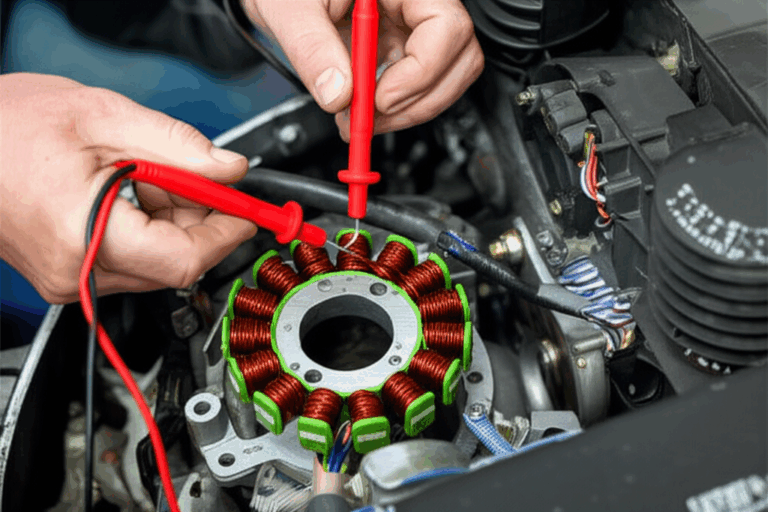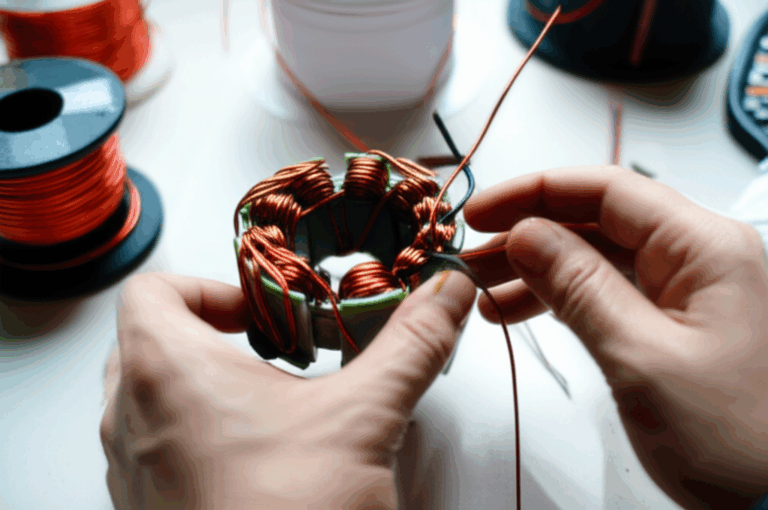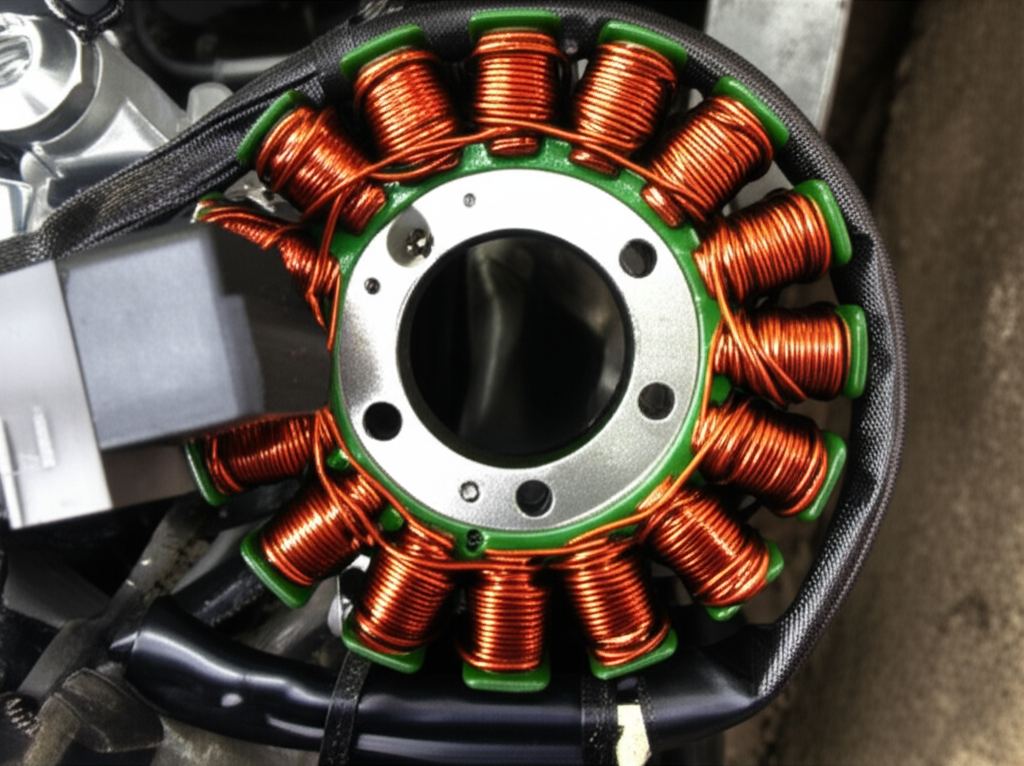
Optimizing Oil-Immersed Transformer Lamination Design for Significant Noise Reduction
Table of contents
- Introduction
- Understanding Transformer Noise: The Role of the Core
- Primary Noise Source: Magnetostriction Explained
- Noise Propagation Paths
- Factors That Amplify Core Noise
- Foundational Principles of Lamination Design for Noise Mitigation
- Electrical Steel Selection That Actually Lowers Noise
- Lamination Thickness and Grain Orientation
- Core Joint Design: Step-Lap vs Mitered
- Clamping Pressure and Core Rigidity
- Manufacturing and Assembly Techniques That Keep Noise Down
- Precision Shearing and Punching
- Stress Relief Annealing
- Careful Core Stacking and Assembly
- Measuring and Verifying Noise Reduction
- Standards and Benchmarks You Can Trust
- Acoustic Testing and Analysis That Reveal Root Causes
- My Design Playbook: Practical Steps and Trade-offs
- Benefits of Investing in Noise-Optimized Lamination Design
- Future Trends and What I’m Watching
- Conclusion and Next Steps
Introduction
I design and troubleshoot oil-immersed transformers for a living. Over the years I’ve learned one simple truth. If you want a quiet transformer, you win or lose the battle in the core. You can add barriers, build enclosures, or move the substation. The lamination design still decides how much the unit hums day and night.
In this guide I’ll share what has worked for me. I’ll cover core materials, lamination geometry, joint design, clamping, and the manufacturing details that make or break noise. I’ll also touch on measurement methods, standards like IEC 60076-10 and NEMA TR 1, and practical trade-offs so you can justify decisions with real numbers. My goal is simple. Give you enough depth that you can design for low noise with confidence without getting bogged down in theory for theory’s sake.
Understanding Transformer Noise: The Role of the Core
Primary Noise Source: Magnetostriction Explained
Every quiet transformer starts with a quiet core. The main source of acoustic noise in an oil-immersed transformer is magnetostriction in the laminations. In plain terms the electrical steel changes shape slightly as the magnetic field cycles. That tiny expansion and contraction happens twice every cycle, so 100 or 120 Hz for typical grids. The laminations vibrate, those vibrations travel into the oil and tank, and the tank radiates sound into the environment.
The magnitude of magnetostriction depends on the steel grade and the magnetic flux density. Higher flux density means stronger magnetostriction. That often shows up as a sharp rise in low-frequency components in the noise spectrum as you drive the core toward higher induction. That’s why running flux density down a tick can buy you a noticeable drop in dB(A), especially near resonance peaks.
Different steels behave differently. Conventional grain-oriented electrical steel (GOES) sits in the 2 to 3 ppm magnetostriction range around 1.7 T. Domain-refined or laser-scribed GOES can push that down by a noticeable margin. Amorphous metal takes a big bite out of magnetostriction. Values often sit below 0.5 ppm which is why amorphous-core distribution transformers tend to sound quieter at the same rating.
Noise Propagation Paths
Noise starts in the core. It doesn’t stay there.
- Core to oil: The vibration couples through the core supports and surfaces into the transformer oil. Oil carries those vibrations efficiently.
- Oil to tank: The tank acts like a diaphragm at certain frequencies. It turns vibration into acoustic radiation.
- Tank to environment: You hear it as a steady hum. In octave-band analysis you’ll often see energy concentrated around 100 or 120 Hz with higher harmonics due to non-linearities and magnetization effects.
A little bonus insight. When the core is quiet yet the tank still sings, look for coupling through core clamps and structural paths. A stiff path without damping turns a small core vibration into a loud panel response.
Factors That Amplify Core Noise
A few design choices and conditions amplify noise even if your material is good.
- Core rigidity: Loose laminations rattle. Overly stiff clamps can push steel into stress that worsens magnetostriction. Balance matters.
- Resonance: Structural resonances in the core frame, yokes, or tank can amplify narrow bands. When the core’s vibration lines up with one of those resonances you get a loud spot in the spectrum.
- Flux density and harmonics: High flux density drives magnetostriction. Harmonic distortion from the grid or connected loads excites higher frequency modes.
- Manufacturing stresses: Cutting and punching create local stresses and burrs. Both change magnetic domain behavior which increases magnetostriction and local heating.
Foundational Principles of Lamination Design for Noise Mitigation
Electrical Steel Selection That Actually Lowers Noise
Your choice of steel sets the noise floor.
- Grain-Oriented Electrical Steel (GOES and CRGO): CRGO is the workhorse for power and distribution cores. In my experience the quietest GOES cores use premium grades with high permeability, low specific core loss, and domain refinement. Laser-scribed GOES reduces domain width which lowers magnetostriction at the same induction. Align the rolling direction with the main flux path. Misalignment raises core loss and noise.
- Amorphous metal: If you want a step change in quiet operation, amorphous metal delivers. It offers extremely low magnetostriction and low specific core loss. It comes with trade-offs. Lower stacking factor, higher material cost, more fragile ribbons, and different handling. For many distribution transformers the 5 to 10 dB(A) reduction you can achieve at equivalent rating justifies those trade-offs in noise-sensitive sites.
- Non-oriented electrical steel (NOES) and nanocrystalline alloys: NOES can work for specific geometries although it won’t match GOES for low magnetostriction in the rolling direction. Nanocrystalline materials have promise for specialized designs and high-frequency transformers yet they’re not mainstream for large oil-immersed power units.
If you want a quick primer on materials and formats used across industries you can skim this overview of electrical steel laminations. I still send junior engineers to resources like that when they’re learning the landscape.
Lamination Thickness and Grain Orientation
Thinner laminations reduce eddy current losses which is the primary reason designers chase 0.23 mm or 0.20 mm thickness in premium grades. Noise can improve as a side effect. Why. Lower loss means less heating and less local magnetoelastic activity that can excite vibration. Expect modest noise gains from thickness alone in the range of 0.5 to 1 dB(A) in my experience. The bigger gains come from material quality and assembly.
Grain orientation must align with the main flux direction. GOES gives you superb magnetization behavior along the rolling direction. Mitered joints or step-lap patterns keep flux aligned through corners and joints which keeps magnetostriction down. If you misalign the grains you pay twice. Higher losses and higher hum.
Core Joint Design: Step-Lap vs Mitered
If I could pick one lever besides material choice, I’d pick the joint design.
- Step-lap joints: A step-lap joint staggers the overlaps across multiple steps. That spreads the flux transition over a longer path. You reduce localized flux crowding and the sharp magnetostriction changes that come with it. In practice I’ve seen 1 to 3 dB(A) improvements when moving from simple mitered joints to optimized step-lap patterns. You also lower inrush and tame localized heating near joints.
- Mitered joints: Mitered joints can work well with careful design although they concentrate the transition. That can increase vibration near the joint line. If the manufacturing tolerances and cutting quality are top notch you can still achieve good results. Step-lap usually wins for noise on medium and large units.
Precision matters. Joint geometry relies on accurate cutting and stacking. Any gap, burr, or misalignment at the steps shows up as flux leakage and added hum.
Clamping Pressure and Core Rigidity
Clamping is one of those Goldilocks problems. Too loose and laminations chatter. Too tight and you put the steel into high mechanical stress that raises magnetostriction.
- Target uniform clamping pressure roughly between 0.8 and 1.5 MPa for many designs. Your exact value depends on the core size, frame stiffness, and the steel grade.
- Use rigid frames that distribute pressure evenly. Make sure core bolts seat properly and that frame deflection under load is minimal.
- Add compliant layers where needed. Elastomeric interfaces at the right spots can convert some vibration energy into heat before it reaches the tank.
- Watch the yoke and leg lamination design. Discontinuities in support cause local vibration modes that amplify specific frequencies.
Manufacturing and Assembly Techniques That Keep Noise Down
Precision Shearing and Punching
I can trace many noisy transformers back to the cutting room. Burr formation and edge stress change the magnetic domain behavior near the edges. That shows up as extra hum and heat.
- Keep burr height below 0.02 mm when you can. Once you exceed roughly 0.03 mm you see measurable increases in interlamination eddy currents and vibration.
- Use sharp tooling and keep it maintained. Dull punches create rolled edges and work hardening.
- Choose cutting clearances and speeds that suit the grade. Premium GOES benefits from tighter process control than commodity NOES.
- Think about interlamination resistance. The coating and burrs together set your insulation between sheets. Too low and you increase circulating currents. Too high in the wrong spots and you get poor stacking factor and micro-gaps that buzz.
If you’re sourcing E-I or U-I shapes for distribution transformers, consistent cutting and coating matter as much as raw steel grade. It helps to work with suppliers who specialize in transformer lamination core production because they live and breathe these tolerances.
Stress Relief Annealing
Cutting and forming create mechanical stress. That stress pins magnetic domains and increases magnetostriction. Stress relief annealing restores magnetic properties and reduces noise. Follow the steel maker’s annealing schedule. Don’t cut corners on ramp rates or soak times. It can be tempting to push throughput. You pay the price later on the test floor when you chase an extra 2 dB(A).
Careful Core Stacking and Assembly
Stacking is where design intent meets reality.
- Keep the stack tight and uniform. Avoid micro-gaps at step-lap transitions. Gapping in transformer cores shifts local flux density and raises noise.
- Maintain a high stacking factor. Loose stacks vibrate and radiate. Uniform pressure and flatness across the pack make a bigger difference than most people think.
- Control lamination alignment. Offsets at the yoke or legs inject additional harmonics and create uneven clamping pressure. That turns into hot spots and hum.
- Pay attention to core bolt design. Bolts should provide even load without creating stress risers in the laminations. Insulate bolts correctly to avoid stray circulating currents through hardware.
I like to review yoke lamination design and leg lamination design as separate checks. It forces me to think about support points, pressing techniques, and the load path into the frame. Those details set the vibration modes and the coupling into the tank.
Measuring and Verifying Noise Reduction
Standards and Benchmarks You Can Trust
When you claim a unit is quiet you need to measure it the right way. I rely on two core documents.
- IEC 60076-10 sets methods to determine the sound power level of transformers. It covers measurement arrangements, corrections, and reporting. It gives you a common yardstick across factories and projects.
- NEMA TR 1 provides noise limits and reference values for distribution and power transformers in North America. It’s a practical guide for specification and acceptance.
Many urban sites aim for levels below 65 dB(A) at 1 meter for typical ratings. Sensitive locations push below 60 dB(A) or even 55 dB(A). Meeting those tighter limits usually requires a quiet core and a smart site plan. It may also mean enclosures, barriers, or elastomeric mounts to break structural paths.
Acoustic Testing and Analysis That Reveal Root Causes
You need a toolbox that finds the real issues.
- Sound power level: Use a microphone array around the unit to calculate sound power as IEC 60076-10 prescribes. Sound power lets you compare designs without site effects.
- Octave band and spectrum analysis: Plot the noise spectrum. Look for the 100 or 120 Hz fundamental and harmonics. Peaks often line up with structural resonances.
- Vibro-acoustic analysis: Combine accelerometers on the core frame and tank with microphones in the field. That shows how vibration turns into radiated noise.
- Acoustic cameras: Acoustic imaging pinpoints hot spots on the tank or bushings. I use this when I suspect panel modes or localized paths from clamps.
- Finite Element Analysis (FEA): A vibro-acoustic model helps when you’re balancing core stiffness, joint design, and tank panel dynamics. Use it to avoid resonances rather than to chase them after the fact.
- Computational Fluid Dynamics (CFD): It’s not a first-line tool for noise. It helps when cooling flow interacts with structures that also carry vibration or when fan and pump noise couples into the tank.
My Design Playbook: Practical Steps and Trade-offs
Here’s how I approach a low-noise oil-immersed transformer from the ground up.
1) Set the noise target and test method
- Pick a target grounded in standards. For example, meet or beat a specified NEMA TR 1 level with a margin of 2 dB(A).
- Specify IEC 60076-10 measurement methods in the purchase documents. It reduces arguments later.
2) Choose materials with noise in mind
- For power transformers choose a premium GOES with high permeability and low magnetostriction. Domain-refined or laser-scribed grades help.
- Consider amorphous metal for distribution units in noise critical neighborhoods. Expect 5 to 10 dB(A) lower noise at the same rating in many cases.
- If you’re comparing supply options review the core loss and magnetostriction curves at your design induction. Ask for data, not just marketing sheets.
If you’re evaluating suppliers who focus on CRGO specifically it’s worth browsing a primer on CRGO lamination core options so you can cross-check specs and coating systems.
3) Set flux density and geometry
- Avoid pushing induction to squeeze cost if you have strict noise limits. A small reduction in flux density often saves a few dB(A).
- Use step-lap joints with proven sequences and overlap lengths. Validate the pattern with FEA if the geometry is novel.
- Keep the limb and yoke cross-sections generous enough to prevent local saturation at corners and joints.
4) Nail the cutting and punching process
- Specify burr height limits. Push below 0.02 mm for premium builds.
- Define inspection checkpoints for burrs, lamination flatness, and coating integrity.
- Require stress relief annealing per steel maker guidance. Document soak times and temperatures.
5) Stack and clamp with consistency
- Write clear work instructions for stacking sequence and step-lap assembly. Small deviations creep in on the shop floor.
- Define clamping pressure targets between 0.8 and 1.5 MPa for your frame design. Measure it. Don’t guess.
- Use torque specifications and verify with load indicating washers or ultrasonic bolt tension checks where practical.
- Evaluate core bolt layout and stiffness. Spread the load to avoid local bowing.
6) Control vibration paths into the tank
- Use elastomeric mounts or compliant layers under core support beams where appropriate. Tune the stiffness so you avoid moving resonances into occupied bands.
- Stiffen large tank panels or change bead patterns if panel modes align with the 100 or 120 Hz fundamental or its harmonics.
7) Test early and iterate
- Run a pilot core build. Measure bare core vibration with accelerometers before tanking. It’s cheaper to fix issues when the core isn’t sealed in oil.
- Use octave band analysis to track changes. When a change helps the 100 or 120 Hz band you almost always win on overall dB(A).
What noise reductions can you expect from specific moves
- Switch from simple mitered joints to optimized step-lap patterns and you can save 1 to 3 dB(A).
- Improve clamping uniformity and you often pick up 0.5 to 2 dB(A).
- Drop to amorphous metal on comparable distribution ratings and you can see 5 to 10 dB(A) gains.
- Reduce lamination thickness for premium GOES and you may see 0.5 to 1 dB(A), with the bigger reward in core loss reduction.
I like to sanity-check designs against a few benchmark cases. One documented urban substation replacement reported a drop from roughly 70 dB(A) to about 62 dB(A) at the property line using a step-lap core with domain-refined GOES. That kind of result lines up with what I see when a team tackles material, joints, and clamping together rather than tinkering with one variable at a time.
Benefits of Investing in Noise-Optimized Lamination Design
- Environmental compliance: You meet tough limits in cities and residential zones without resorting to massive enclosures.
- Public acceptance: Fewer complaints, fewer headaches. A quieter yard makes neighbors friendlier to your projects.
- Reliability and life: Lower vibration means less mechanical stress on core clamps, windings, and the tank. You avoid fatigue cracks and fastener issues.
- Total cost of ownership: A quiet core reduces or eliminates the need for expensive sound walls. If you use amorphous steel you often save energy too which eases the cost delta.
- Market advantage: Quieter transformers stand out. When bids come down to performance at noise-sensitive sites, a low-noise design wins.
Future Trends and What I’m Watching
I’m excited about a few directions that promise quieter cores without punishing cost.
- Smarter steels: Ongoing work on domain-refined GOES and coatings that stabilize interlamination resistance should shave off a few more dB(A) over time.
- Nanocrystalline options: For certain ratings and high-frequency applications nanocrystalline materials could open new doors. I keep an eye on availability and manufacturability.
- Simulation that matters: Coupled electromagnetic-structural-acoustic FEA is getting more practical. It helps predict core vibration patterns and tank radiation before you cut a single lamination.
- Better manufacturing control: Vision systems that check step-lap alignment and burrs in-line will improve consistency. Less variation means fewer noisy outliers.
- Integrated noise strategies: Combining a quiet core with tuned elastomeric mounts and smart acoustic enclosures creates robust solutions for urban substations.
If you’re comparing steel families for noise and efficiency trade-offs it helps to brush up on the broader family of silicon steel laminations. You’ll often find a grade that hits your noise target without overspending.
Conclusion and Next Steps
I’ve said it a few different ways, yet it bears repeating. The lamination design controls transformer noise more than any other lever. Magnetostriction at the core starts the story. Your choices about steel, thickness, grain orientation, joint geometry, clamping, and manufacturing finish it.
If I had to distill my hard-won lessons into a short checklist it would look like this:
- Pick low magnetostriction steel and align grains with the flux path. CRGO or premium GOES with domain refinement if you stay with silicon steel. Amorphous if the site is highly sensitive to noise.
- Use step-lap joints with precise cutting and assembly. Keep burrs tiny. Keep stacks tight.
- Clamp evenly and within a defined pressure range. Avoid both rattle and overstress.
- Validate with IEC 60076-10 sound power measurements and octave band analysis. Find resonances early with accelerometers and acoustic imaging.
- Iterate in the factory before you ship. Fixing noise in the field costs more.
If you’re new to core formats in distribution transformers a short read on classic E-I lamination cores can help you see how joint choices and grain direction show up in the real parts you buy. For a broader view of how vendors present options at the transformer level I also like pointing folks to overview pages for transformer lamination core. They serve as handy glossaries when you’re aligning specs with a supplier.
One last thought. Noise is a systems problem with a clear starting point. Start at the laminations. Get the core quiet. Then chase the remaining paths into the tank and environment. You’ll spend less money and deliver a transformer that keeps both the utility and the neighbors happy.